Ecommerce tracking is easy to grade. An order happened or it didn't, on a page you control. Lead gen has none of that. A form fill is worth zero dollars until a rep calls, qualifies, and closes, and by then the browser session is long dead.
What's broken in almost every lead-gen account we audit?
Three things: the account optimizes toward raw form fills, sales says the leads are junk, and nobody can trace a signed contract back to a campaign. It repeats across HVAC, law firms, med spas, dealerships.
- The only conversion the platform has ever seen is "form submitted," so smart bidding got very good at buying cheap form fills. It isn't malfunctioning. It's doing what it was told.
- Lead records hold a name, an email, and a phone number. The click and the contact are separate universes.
- The thank-you page tag counts refreshes and bookmarks as conversions, inflating the number by an amount nobody measured.
- Phone leads are invisible, which for local service businesses means most of the pipeline is.
All plumbing. You can't out-think missing data.

- Click ID captured — gclid, fbclid, msclkid read on first view
- Stamped on the lead — Hidden fields into a waiting CRM field
- Webhook success event — The form system confirms it, not a listener
- CRM stages logged — Lead, booked, qualified, closed won
- Outcomes uploaded — Back to Google, Meta, Microsoft and TikTok
Step one: how do you capture the click ID at first touch?
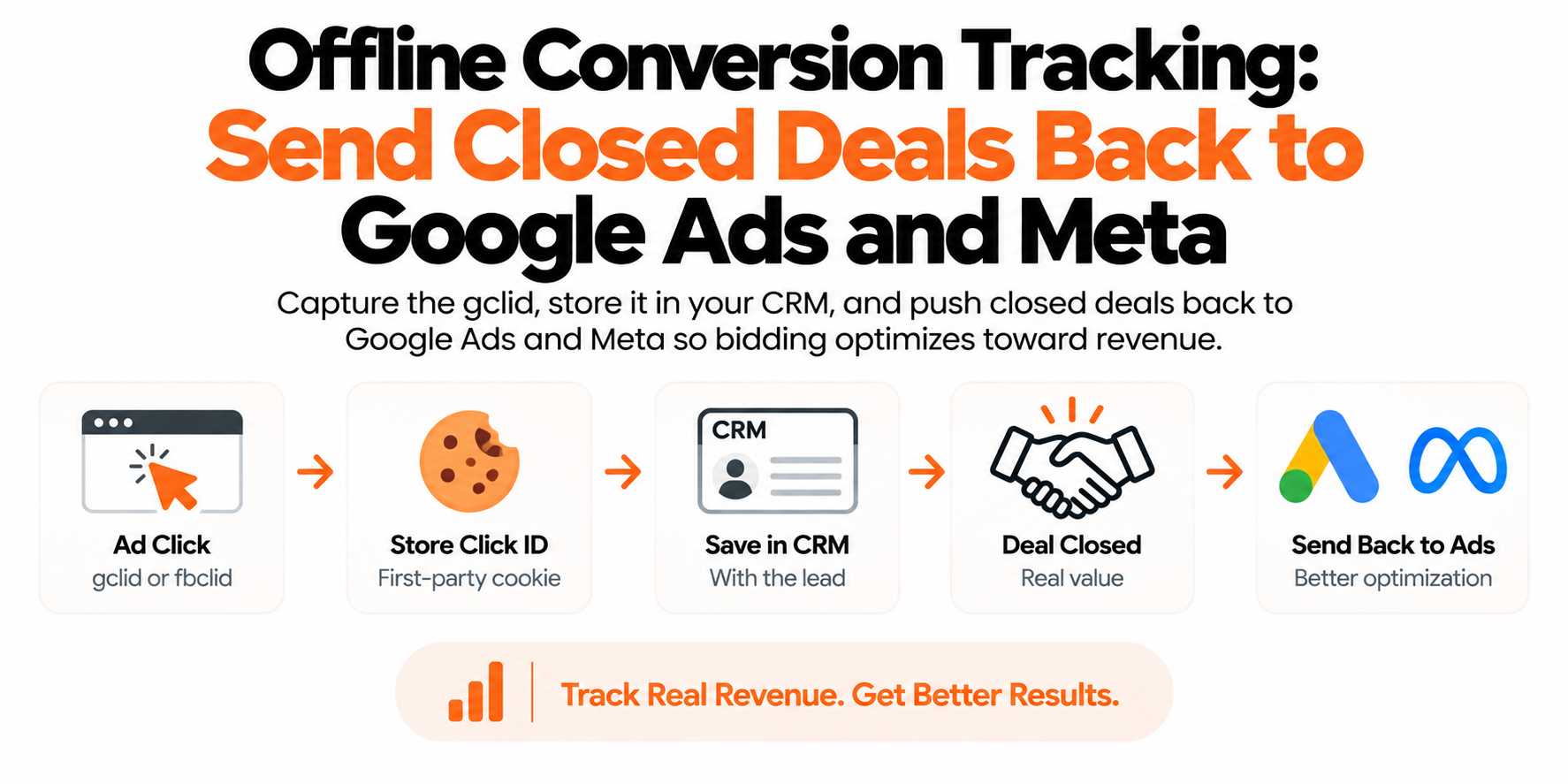
Read the click ID out of the landing URL on the first pageview, store it in first-party storage, stamp it into every form. Two dozen lines, and the most important code in the build.
The click ID is the platform's receipt: gclid, gbraid and wbraid for Google Ads, fbclid for Meta, msclkid for Microsoft, ttclid for TikTok. If it never reaches the lead record, nothing downstream can reconnect a closed deal to its click.
// First-touch click ID capture. Load before your forms render.
(function () {
  var IDS = ['gclid', 'gbraid', 'wbraid', 'fbclid', 'msclkid', 'ttclid'];
  var q = new URLSearchParams(window.location.search);
  var saved = {};
  try { saved = JSON.parse(localStorage.getItem('tc_click') || '{}'); } catch (e) {}

  IDS.forEach(function (key) {
    var val = q.get(key);
    if (!val) return;
    saved[key] = val;
    saved.first_seen = saved.first_seen || new Date().toISOString();
  });
  localStorage.setItem('tc_click', JSON.stringify(saved));

  document.querySelectorAll('form').forEach(function (form) {
    Object.keys(saved).forEach(function (key) {
      if (form.querySelector('[name="' + key + '"]')) return;
      var input = document.createElement('input');
      input.type = 'hidden';
      input.name = key;
      input.value = saved[key];
      form.appendChild(input);
    });
  });
})();
Two things break this. Most lead forms are embeds that render after your script runs, so fields get stamped onto a form that doesn't exist yet — re-run inside a MutationObserver. And the CRM needs a custom field waiting for each value; an input that posts into nothing looks like it's working, which is worse than none.
Step two: what counts as a real success event?
One the form system itself confirms. Button clicks and page loads are guesses, and they overcount.
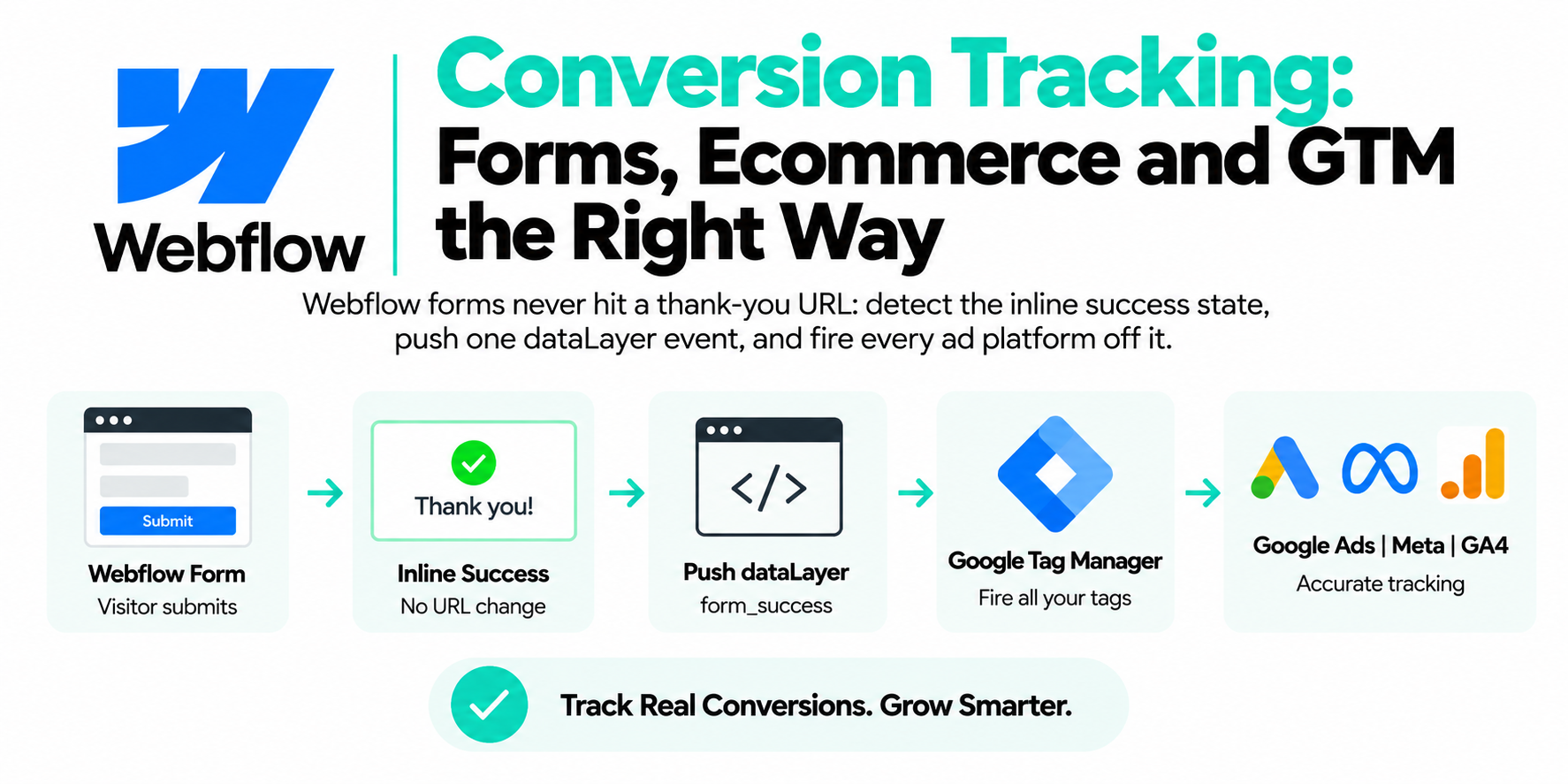
Lead gen makes this harder because the form is almost never native HTML. It's a HubSpot embed, a booking widget in an iframe, a GoHighLevel funnel step. You can't reach into an iframe from the parent page, so a click listener on the surrounding div measures intent, not submission. That's behind most form conversions that aren't firing — and the mirror image, conversions firing more often than leads exist.
Stop listening to the page; listen to the system of record. Every serious form and booking tool emits a webhook when a submission is accepted. Point it at your server container, build the event there, send it onward with the click ID and hashed contact details attached. One submission, one event.
Step three: why does the CRM become the scoreboard?
Because it's the only system that knows what a lead was worth. The website knows a form was submitted; only the CRM knows the deal closed for a real dollar amount. So we define stages that are mechanical, not vibes-based:
- Lead — a verified submission or tracked call. Cheap, plentiful, weak signal.
- Booked — an appointment actually on the calendar. Usually the first stage that correlates with revenue.
- Qualified — a human confirmed the problem, the budget, and the authority. Junk gets filtered here, which is why sales trusts this stage.
- Closed won — signed, with the real contract value on the record.
Values have to be honest or the thing poisons itself. Don't stamp full contract value on a booked call; it's worth average deal size times your booked-to-won rate. A value invented to look good becomes a bid the algorithm takes literally.

| Fed form fills | Fed CRM outcomes |
|---|---|
| Gets very good at cheap submits | Booked, qualified, closed won |
| Sales calls the leads junk | Values from real contract amounts |
| Refreshes and bookmarks inflate it | Hashed email rescues missing gclid |
| Phone pipeline stays invisible | Optimize to deepest stage in window |
Step four: how do you send the outcomes back?
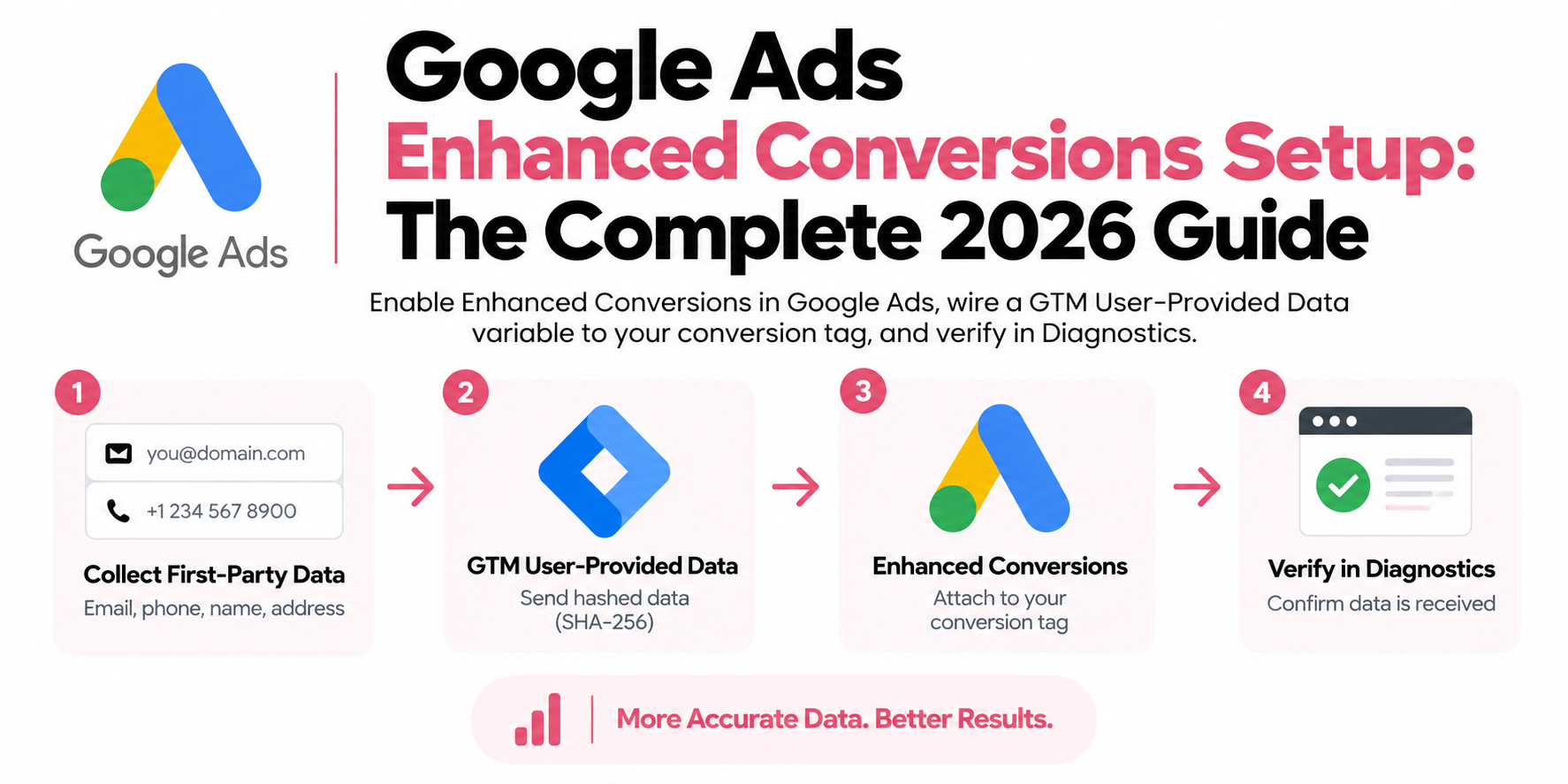
You upload them. Google Ads takes offline conversion imports, or Enhanced Conversions for Leads, which matches on hashed email and phone when the click ID is missing. Meta takes server events through the Conversions API, Microsoft off msclkid, TikTok the same way. Our offline conversion tracking guide covers the mechanics platform by platform.
The constraint that trips people up is the attribution window. Google Ads accepts an offline click conversion only within 90 days of the click, and Meta's attribution tops out at a 7-day click window by default. If your sales cycle runs four months, closed won cannot get attributed back, however good your plumbing.
So optimize toward the furthest-down stage that reliably lands inside the window, and report on the rest. Deals closing in 30 days? Feed closed won. Closing in 120? Feed qualified, and keep closed-won revenue in your own reporting as the number you judge the channel by.
Why does this have to be first-party and server-side?
Because the browser is the least reliable link in a chain that spans weeks. Server-side tracking means the conversion event is built and sent by a server you control, not by JavaScript in the visitor's browser; first-party means the collection endpoint lives on your own subdomain, not a third-party ad domain. That buys three things browser-only tracking can't:
- The events survive. Ad blockers, iOS restrictions, and browser privacy defaults eat a real share of browser-fired lead events. A webhook from your CRM to your server doesn't care what the visitor installed.
- The click ID lives long enough. Safari's ITP caps script-set cookies at seven days. B2B deals don't close in seven days. First-party identifiers set server-side, mirrored onto the CRM record, keep attribution alive across a real sales cycle.
- Match quality goes up. The CRM has a verified email and phone; the browser often has neither when the pixel fires. Hashed contact data from the server lets platforms match a lead to a real user — and every platform gets the same event with the same event ID, so dashboards stop disagreeing.

- Pull a date range from the CRM — Count the real lead records for the period — that is your denominator
- Count what each platform reported — Google, Meta, Microsoft, TikTok and GA4 for the identical date range
- Check click ID coverage — What share of lead records actually carry a gclid, fbclid or msclkid
- Look for counts above the CRM — Any platform reporting more conversions than leads exist is double firing
- Confirm stage uploads land — Offline imports accepted without match errors, held to 95%+ agreement
How do we prove the rebuild worked?
By reconciliation, not dashboard vibes. We pull a date range from the CRM, count the real lead records, then count what each platform and GA4 reported for the same range. We check the share of lead records carrying a click ID, the share of CRM leads showing up as platform conversions, whether any conversion count exceeds the CRM count (that's double firing), and whether stage uploads land without match errors. We hold the build to 95%+ agreement before calling it done; a finished setup typically lands around 98%.
What actually changes afterward?
The mechanism. Smart bidding stops hunting for people who fill out forms and starts hunting for people who resemble the ones who booked, qualified, and signed. Same budget, different target.
What follows depends on your offer, your market, and how much bad volume the account bought before. Anyone quoting a cost-per-lead improvement percentage for a tracking project is guessing — they can't know your close rate before seeing your data. Expect raw lead counts to fall, and expect that to be good news.
What a tracking rebuild does not fix
A weak offer. If your quote is uncompetitive or the landing page promises something sales walks back, better attribution just tells you faster.
Slow follow-up. Speed-to-lead is the biggest lever in most lead-gen operations and it's entirely yours. A perfectly instrumented lead called back three days later is a perfectly instrumented lost deal.
And a sales process that doesn't log outcomes. If reps don't move stages consistently, the signal you send back is noise. CRM hygiene is a prerequisite the client owns.
Frequently asked questions
How long does a lead-gen tracking rebuild take?
The audit takes a few days; the build runs one to three weeks depending on the funnel platform, the CRM, and how fast we get admin access. Then a few weeks of live data before bidding changes are worth judging.
Do I need a gclid to import offline conversions to Google Ads?
It's the cleanest path, not the only one. Enhanced Conversions for Leads matches on hashed email and phone, covering leads where the click ID never reached the record.
What if my sales cycle is longer than the attribution window?
Optimize toward the furthest-down stage inside the window, usually booked or qualified, and keep closed-won revenue in your own reporting. Google Ads accepts offline click conversions up to 90 days after the click.
Can inbound phone calls be tracked the same way?
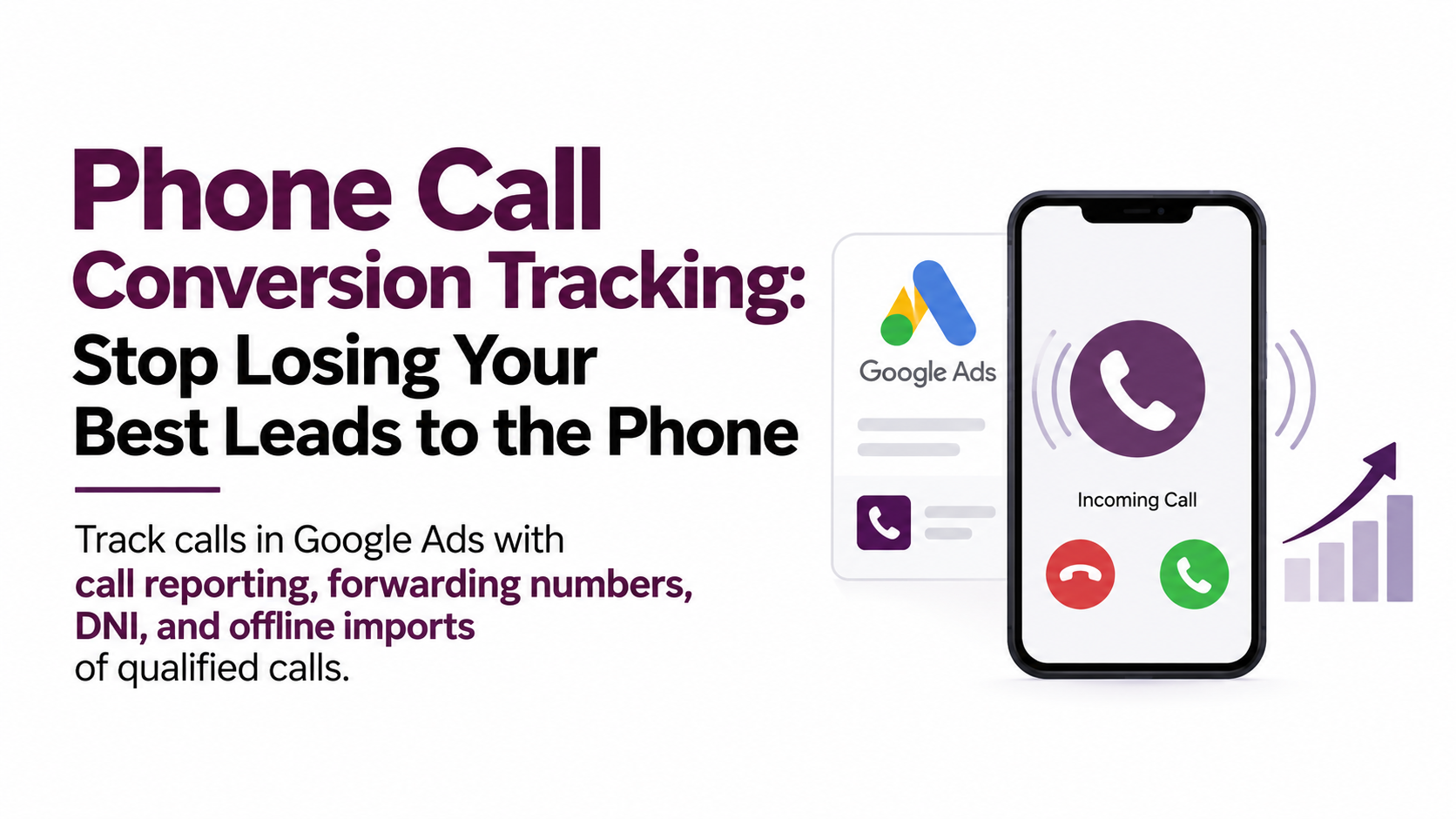
Yes. Calls get their own conversion action, and a call that becomes a customer is uploaded offline like a form lead.
Will optimizing toward qualified leads cut my lead volume?
Usually yes. Raw form counts drop while the share of leads sales can actually work goes up. Judge the change on booked appointments and pipeline, not the form-fill number.
Is server-side tracking legal for lead gen in the US?
Yes, when it's built to respect consent. You can honor Global Privacy Control and state opt-outs and apply restricted data processing. Regulated verticals need extra care about which parameters leave your server.