I've audited plenty of accounts where the owner was ready to kill Performance Max. "It spent $4,000 and Shopify shows nothing." Nine times out of ten the campaign wasn't the problem — the conversion setup was. Duplicate Purchase actions, an add-to-cart marked primary, values missing on half the orders. PMax did exactly what it was told. It was just told garbage.
Why does Performance Max live or die on conversion data?
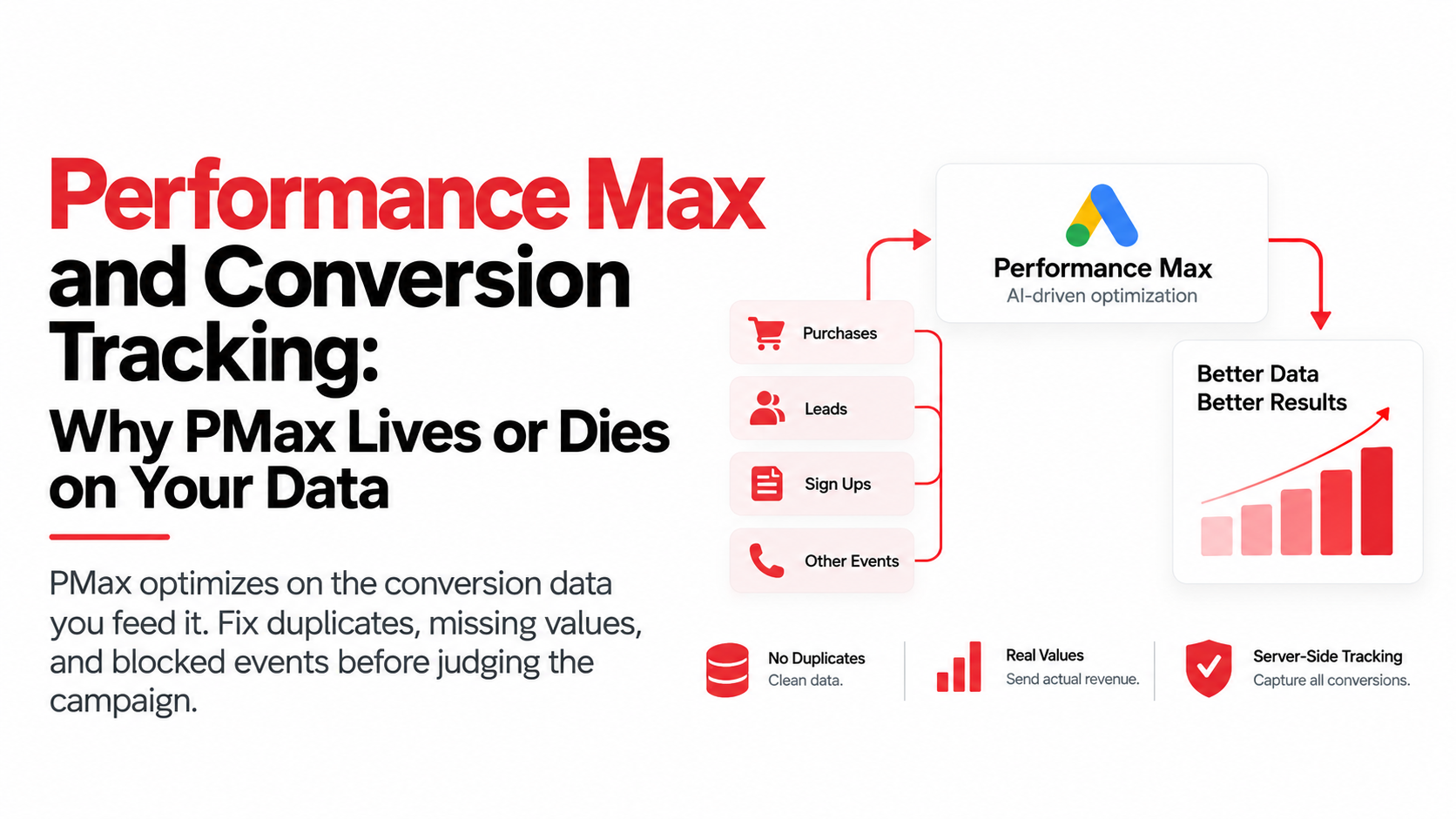
Because conversion data is the only real lever you have left. In Search you control keywords, match types, negatives, bids. In PMax you hand almost all of that to Google: no keyword targeting, no placement control worth mentioning, audience signals that are suggestions, not rules. What's left is the conversion goal. Smart Bidding trains on every conversion you report, then hunts for more people who look like the ones behind those events.
That makes PMax the most data-dependent campaign type Google sells. A human buyer can notice a "conversion" spike came from a thank-you page firing twice. The algorithm can't. It takes your conversion column as ground truth and reshapes the whole campaign around it. Feed it junk and it will cheerfully find you an endless supply of cheap junk.

| Data PMax gets today | After the rebuild |
|---|---|
| Two Purchase actions, both primary | One primary conversion per goal |
| add_to_cart sitting as primary | Real order total and currency |
| No value, or a hardcoded 1 | transaction_id on every purchase |
| Ad-blocked purchases never arrive | Purchase fired server-side from the order |
What tracking problems quietly wreck Performance Max?
Five failure modes cover most of what I see in audits. Four below — the fifth, "PMax shows conversions but my backend disagrees," gets its own section.
Duplicate conversions teach the algorithm the wrong lesson
The classic setup: a hardcoded gtag snippet from 2022 still on the site, plus a GTM conversion tag someone added later. Or a Google Ads conversion action and a GA4 purchase import, both set to primary. Or a browser tag and a server-sent event with no shared transaction ID, so Google can't deduplicate them. Every real order becomes two or three reported conversions. Your cost-per-conversion looks great, and the algorithm optimizes toward whatever produced those phantom wins.
Missing or flat values break value-based bidding
Maximize conversion value and target ROAS only work if conversions carry real values. If your tag sends no value, or a hardcoded "1" on every order, PMax treats a $12 accessory order and a $900 bundle as identical wins — and chases the $12 orders because they're easier. Same in lead gen: if a booked call is worth 20x a newsletter signup and both report the same value, you'll get newsletter signups.
Micro-conversions set as primary
Google Ads splits conversion actions into primary (used for bidding) and secondary (observation only). I still find accounts where add_to_cart or begin_checkout sits as a primary action next to Purchase. PMax then optimizes for the cheapest primary conversion available — and cart-adders are always cheaper than buyers. The campaign reports a beautiful CPA while revenue flatlines.
Blocked and inconsistent events starve the learning phase
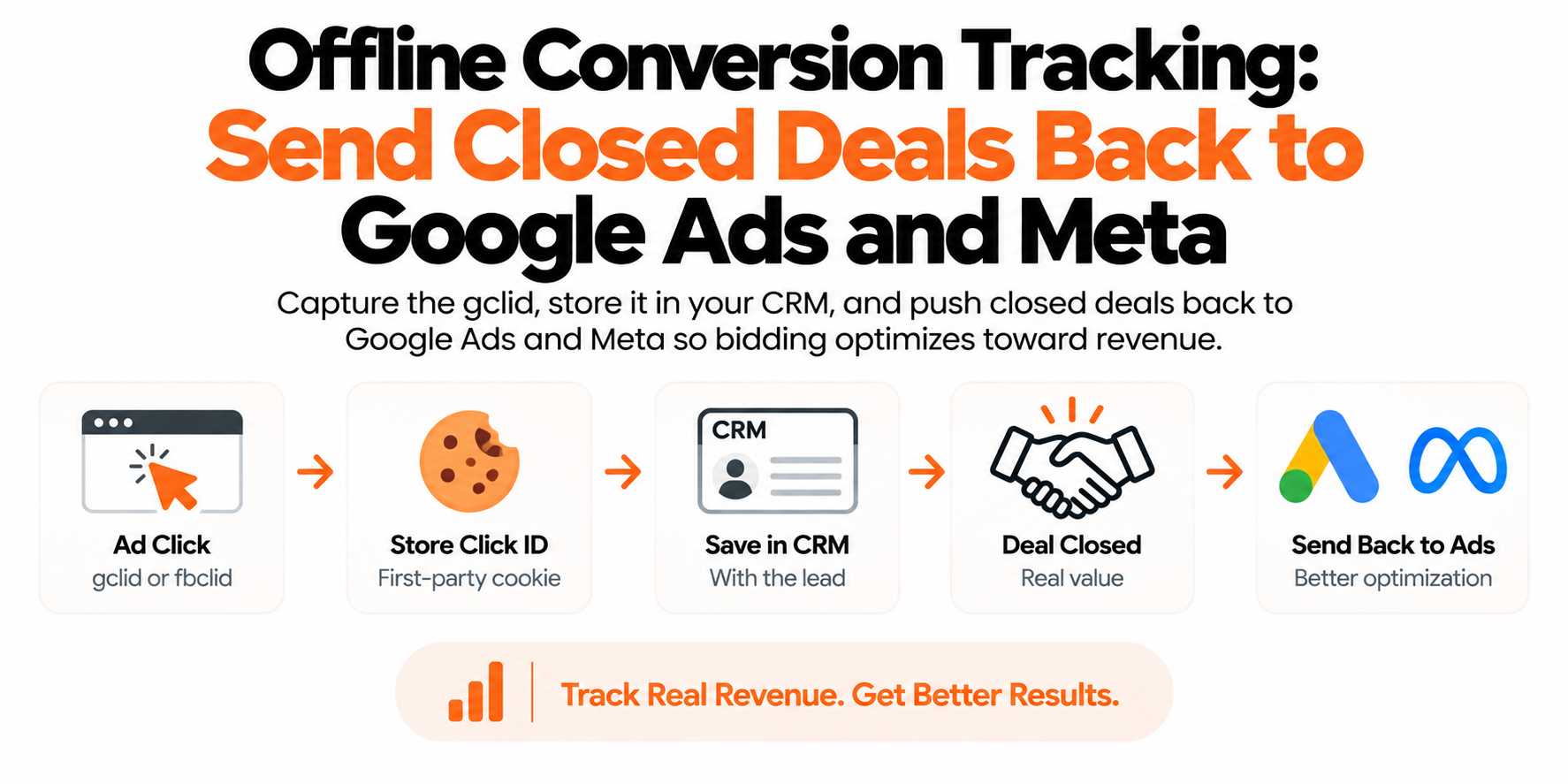
Browser-only tags lose a real slice of purchases to ad blockers, Safari's ITP restrictions, and consent banners — those sales happened, Google just never heard about them. Lumpy offline imports hurt too: Smart Bidding handles a known delay fine, but hand-uploading conversions whenever you remember feeds it feast-and-famine data mid-learning. Fewer, noisier signals mean a longer, dumber learning phase.

| Normal attribution gap | Tracking is lying |
|---|---|
| Conversions reported on click date | Google Ads claims more than you sold |
| Click-through windows up to 90 days | Duplicate tags or a GA4 import too |
| Data-driven attribution takes credit | No transaction_id to deduplicate on |
| Engaged-view conversions on video | Every decision built on it is wrong |
Why does PMax report conversions my backend can't find?
Usually a mix of attribution mechanics and genuine tracking errors, and you need to separate the two. The mechanics that legitimately create gaps:
- Click-date reporting. Google Ads reports a conversion on the date of the click, not the sale. A purchase today from a click three weeks ago lands in a three-week-old row.
- Long conversion windows. Click-through windows can run up to 90 days, so PMax keeps claiming orders long after the click.
- Attribution model. Data-driven attribution takes credit for conversions your backend assigns to email or organic; PMax video inventory also counts engaged-view conversions without a click.
- Counting settings. "Every" vs "One" conversion counting changes the math for repeat actions.
Those explain a moderate, stable gap. What they don't explain: Google Ads claiming more purchases than your entire store processed. That's duplication, full stop. The test is blunt — pull 30 days of Google Ads purchase conversions and the same window's total backend orders, then compare. Google Ads should always claim fewer conversions than your backend's total, since it only sees ad-touched orders. If it claims more, your tracking is lying, and every optimization decision built on it is built on sand.

- Pick one primary per goal — Purchase for a store; demote add to cart, begin checkout and GA4 imports
- Send real, dynamic values — The actual order total and currency, on one consistent tax and shipping basis
- Deduplicate on transaction_id — Your order ID on every purchase, so a refreshed thank-you page still counts once
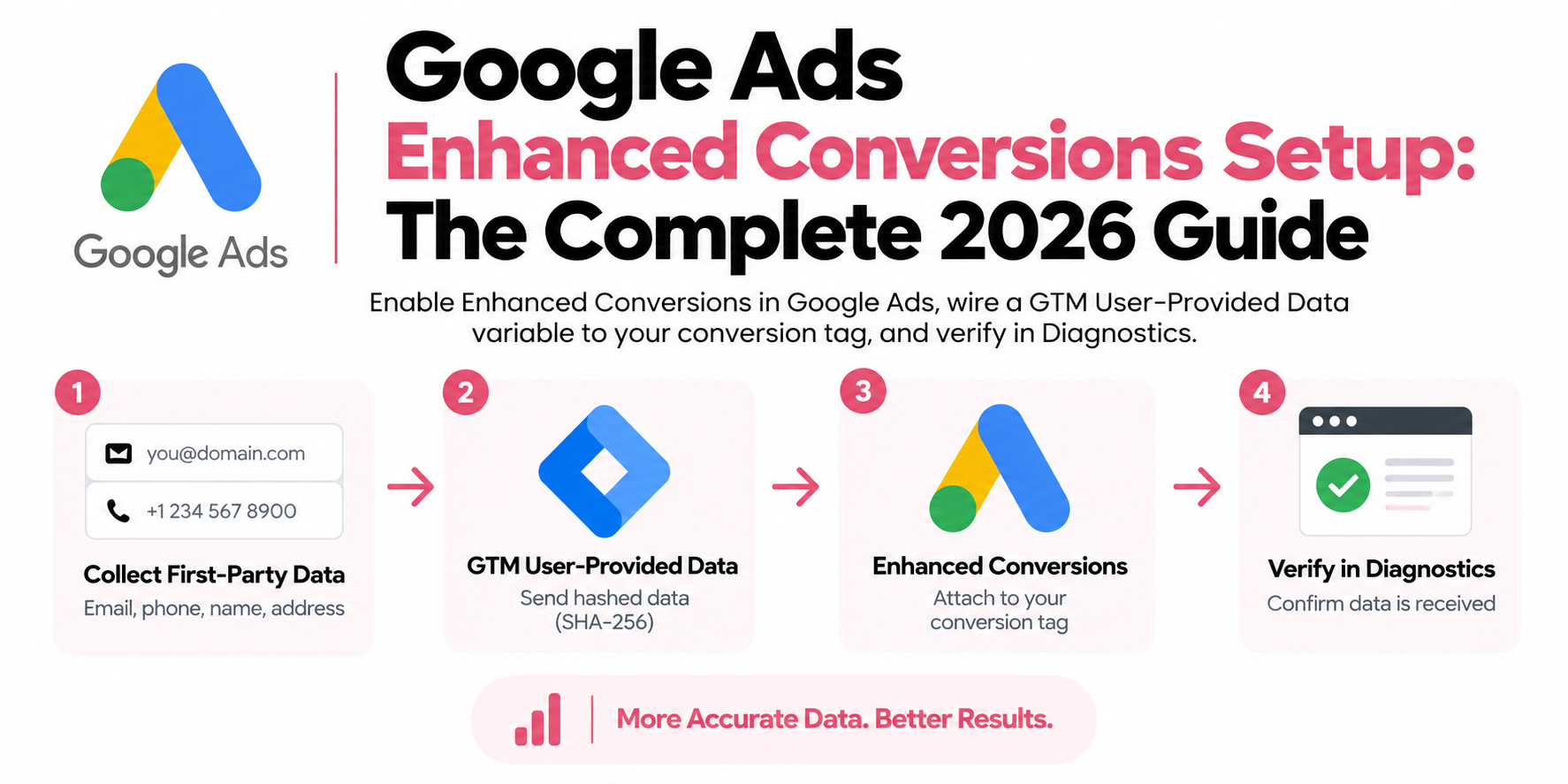
- Turn on Enhanced Conversions — Hashed email and phone let Google match conversions cookies alone would lose
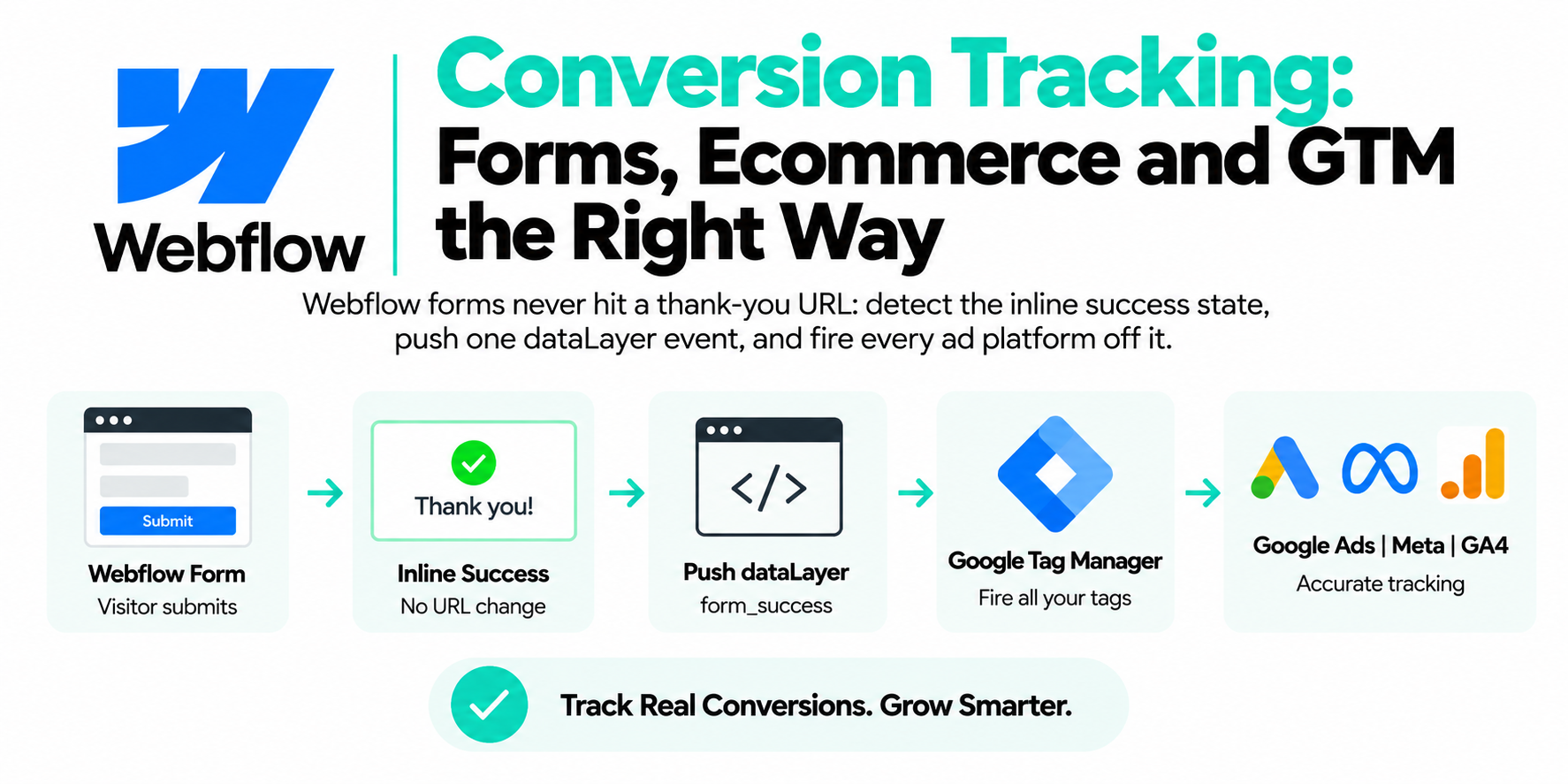
- Move the money event server-side — Fire the purchase from the real order, not from a browser script that survived
- Reconcile monthly — Google Ads conversions against backend orders - the gap should stay stable
How do I fix conversion tracking for Performance Max?
Rebuild from the conversion action outward, in this order:
- Pick one primary conversion per goal. For a store, that's Purchase. Demote everything else — add to cart, begin checkout, GA4 imports of the same event — to secondary. One source of bidding truth.
- Send real, dynamic values. Pass the actual order total with the correct currency (decide once whether it includes shipping and tax, then stay consistent). For lead gen, assign honest proxy values per conversion type.
- Deduplicate with a transaction ID. Send your order ID as the transaction_id on every purchase conversion so Google drops repeat reports of the same order — including the refresh-the-thank-you-page double fire.
- Turn on Enhanced Conversions. Hashed first-party data (email, phone) lets Google match conversions it would otherwise lose — more training signal from the same ad spend.
- Move the money event server-side. Fire the purchase from a server you control, triggered by the actual order, not by whether a browser script survived. More on this below.
- Use new-customer value rules if acquisition is the goal. PMax's new customer acquisition setting can bid higher for (or only for) new customers. With a clean customer list behind it, it stops PMax from harvesting your existing buyers and calling it growth.
- Reconcile monthly. Google Ads conversions vs. backend orders, same window. The gap should be stable and explainable; when it drifts, something broke — find it before the algorithm trains on it.
Do I need first-party server-side tracking for Performance Max?
If you're spending real money on PMax, yes — every problem above gets worse when your only data source is a script in the visitor's browser. Plain-language version: instead of a browser pixel reporting the sale (which ad blockers, Safari's privacy limits, and consent tools routinely kill), your site sends the event to a small server you run — a Google Tag Manager server container on your own subdomain — and that server reports the conversion to Google. First-party means the tracking lives on your domain, with your cookies, under your control.
For PMax, that changes four things. Recovered signal: purchases that browser-only tags lose to ad blockers and iOS actually reach Google, so Smart Bidding trains on your real buyers instead of a biased sample. One source of truth: a single server pipeline firing the purchase with the order ID and true value ends duplicate whack-a-mole — one sender, one transaction_id, one number. Better matching: the server attaches first-party data for Enhanced Conversions on every order, whether or not a browser script loaded. And consent control: you decide what gets shared per the visitor's consent state — which Consent Mode v2 makes non-optional for EEA traffic anyway.
The blunt version: PMax is an automation you can't steer directly. Server-side tracking makes sure the one steering input it accepts is accurate.
When should I actually blame the campaign?
After the audit, not before. Once you've confirmed one primary per goal, real values, transaction-ID dedup, Enhanced Conversions, a server pipeline, and a stable reconciliation gap, performance problems are campaign problems: creative, offer, an over-aggressive target ROAS, thin budget. Run the audit first. It's the cheaper fix and, more often than people want to admit, the whole fix.
Frequently asked questions
Why is my Performance Max campaign not getting conversions?
Check tracking before the campaign: confirm the conversion action fires on a test purchase, is set as primary, and that the campaign uses the right conversion goal. If tracking checks out, the usual causes are an unfinished learning phase, a target ROAS set too high, or too little budget to learn from.
How many conversions does Performance Max need to learn?
Google doesn't publish a hard floor for PMax, but Smart Bidding stabilizes faster with more data — dozens of conversions a month learn far better than a handful. If volume is thin, feed it a slightly earlier high-intent action with an honest value rather than starving it.
Why does Google Ads show more conversions than Shopify?
A moderate, stable gap is attribution: click-date reporting, up to 90-day windows, and engaged-view conversions. But Google Ads should never claim more purchases than your store processed in total — if it does, you have duplicate tags or no transaction ID deduplicating orders.
Does Enhanced Conversions help Performance Max?
Yes. Enhanced Conversions sends hashed first-party data like email addresses so Google can match conversions cookies alone would miss — more accurate training data for Smart Bidding. One of the highest-impact, lowest-risk fixes in a PMax account.
Can I use add to cart as a conversion for Performance Max?
Only as a secondary (observation) action, or a temporary primary with a small honest value if purchase volume is far too thin to learn from. Set as an equal primary next to Purchase, it pulls the algorithm toward cheap cart-adders instead of buyers.
Does server-side tracking work with Performance Max?
Yes, and it's the recommended backbone: a GTM server container on your own subdomain fires the purchase from actual order data, recovers events ad blockers and iOS kill in the browser, and dedupes against the browser tag via transaction ID. PMax then bids on your real sales instead of a partial sample.